


Weak on Maps and the local pack
Incomplete Google Business profiles, thin categories, inconsistent NAP and no review rhythm keep you off the shortlist buyers actually open.
Local & small business
Connect your website, Google Business Profile, local search campaigns and enquiry handling. We help shops, trades and service businesses explain what they do, reach their service area and make it easier for customers to call, request a quote or book.
01 / The landscape
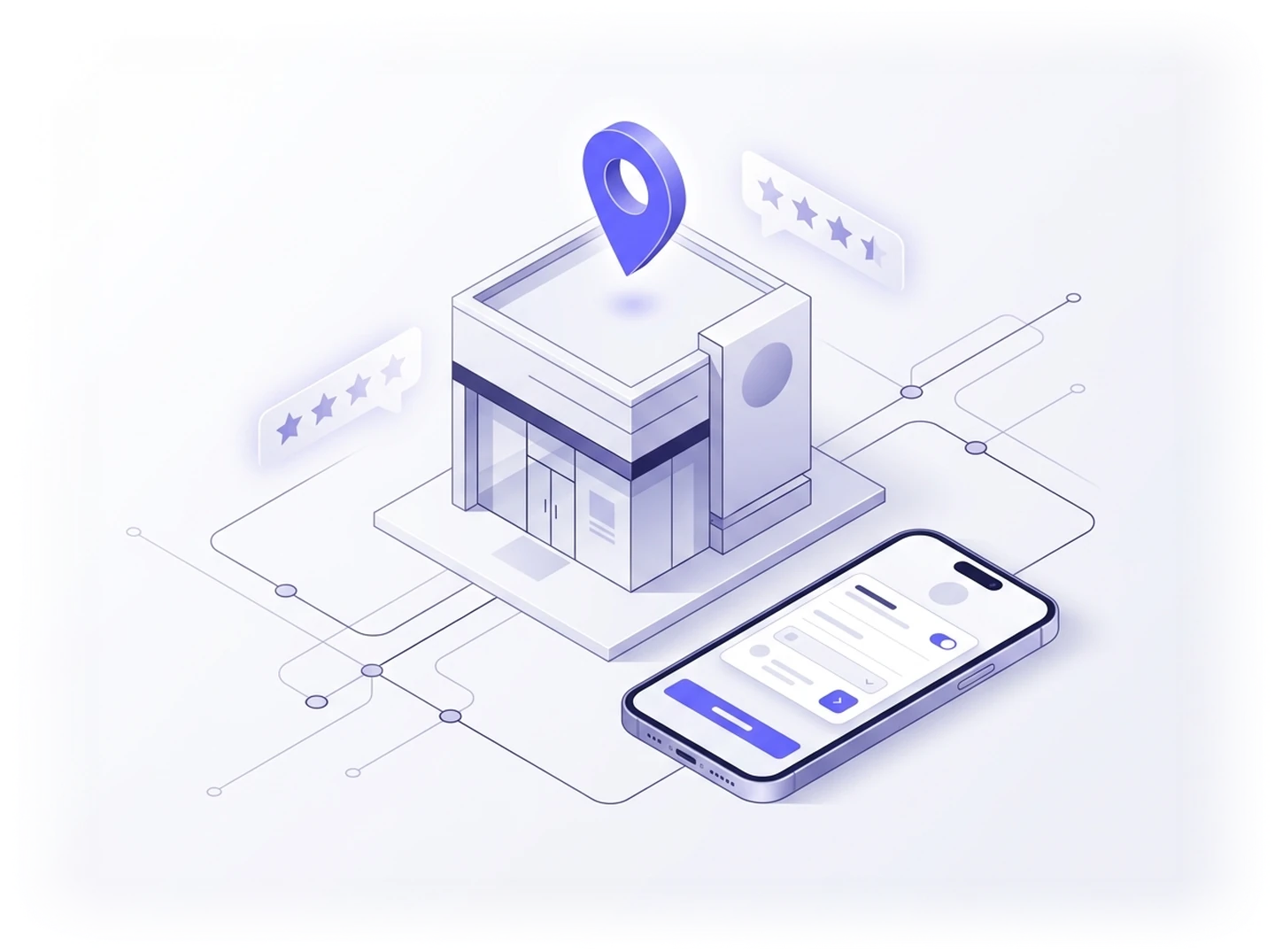
A useful local website answers the questions that stand between a search and a decision: do you offer this service, do you cover this area, when are you available and how can I contact you? Build service pages around real customer needs, with accurate opening hours, original photos and a clear next step. Location pages should describe the work you actually deliver in each area, rather than repeat the same copy with a different town name.
Less theatre. More booked appointments and walk-ins you can measure.
What gets in the way
Incomplete Google Business profiles, thin categories, inconsistent NAP and no review rhythm keep you off the shortlist buyers actually open.
Heavy themes, buried phone numbers and forms that bounce on mobile turn high-intent traffic into a bounce — especially after hours.
Happy customers leave nothing; one bad night defines you. Without a simple ask-and-respond system, reputation drifts.
Forms hit a personal inbox, ads point at a homepage, and nobody owns speed-to-lead. Enquiries die in the gap between click and call-back.
One person for the site, another for ads, a cousin for social — nothing shares data, and you become the project manager.
02 / Solutions
Pick a starting point or combine them. Everything stays under one roof.
Fast, mobile-first sites that show services, proof and how to reach you — without a bloated builder theme.
Profile setup and hygiene, categories, posts, photos and on-site local structure so you compete in the map pack.
Tight geo and service targeting with landing paths that match the ad — spend against calls and bookings, not vanity clicks.
Appointment or quote flows wired to the tools you already use, with confirmation and basic follow-up.
Simple ask workflows and response habits so reputation compounds instead of stalling.
Missed-call text-back, form alerts and reminder sequences that fit a small team — not enterprise middleware.
03 / How we work
We keep scope honest: a fast site, a strong local presence, measured campaigns when they pay back, and light automation so enquiries do not depend on memory.
Google Business, local pages and on-site signals that match how people search your category and city — not generic blog spam.
Click-to-call, clear services, proof, hours and booking or form paths designed for thumbs, not desktop demos.
Simple routing, reminders and optional CRM so leads get answered fast and repeat work is easier to earn.
04 / Where to start
Begin with the point where customers currently get stuck. A business with few relevant visits needs better discovery; one with steady traffic but few calls needs a clearer offer and contact experience.
Find your starting pointCheck your business name, address or service area, contact details and opening hours across your website and business profiles. Give each core service a useful page that explains scope, common questions and how estimates work.
Test calls, quote forms and booking links on a phone. Ask only for the details needed to respond, send a clear acknowledgement and assign an owner to each enquiry. Track missed calls separately from completed conversations.
Review qualified enquiries, response time and the share that becomes booked work. Separate branded searches from new customer discovery. Use those results to decide which services and areas deserve more content or advertising.
05 / What progress looks like
Define success around the quality of the customer journey and the business outcomes your team can measure.
Accurate presence on Maps and search for the services and areas you actually serve.
More calls, forms and bookings from people ready to buy — not random traffic.
Leads reach a human or a clear next step quickly enough to win the job.
Site, local SEO and campaigns managed together so you are not translating between vendors.
06 / Your questions
Straight answers on cost, timelines and what moves the needle for small businesses.
Ask us a questionIt depends on pages, booking needs and integrations. We quote from a short brief with a clear scope — no surprise add-ons mid-build. Many owners start with a tight service site plus Google Business, then add ads once the foundation converts.
Profile fixes and on-site clarity can help quickly; competitive map-pack movement usually takes consistent work over weeks and months. We set expectations from your category and city, not a fake “page one in 7 days” promise.
If the site and Google Business profile are weak, ads waste budget. We often fix presence and conversion paths first, then add paid for speed where margins support it. Many businesses run both once the landing experience is solid.
Yes — setup, categories, services, photos, posts and review response habits. It is one of the highest-leverage channels for local demand and belongs with the same team that owns the site.
Not always. Sometimes we keep the stack and fix speed, structure, calls-to-action and tracking. We rebuild when the foundation blocks growth more cheaply than patching it forever.
Explore further

02 / Industry expertise
Practice sites, booking flows, patient portals and reputation work built with privacy, trust and local discovery in mind.
Explore healthcare
03 / Industry expertise
Storefronts, checkout, product feeds, SEO and paid acquisition so the whole path from discovery to repeat purchase works as one system.
Explore ecommerce
04 / Industry expertise
Listing sites, lead capture, CRM wiring and local campaigns for agents and teams who need enquiries that actually convert.
Explore real estateLet’s build what’s next
Tell us your category, city and where leads fall through. We will map a practical local stack before a proposal.